Warning: Array to string conversion in /home/www/www.sknl.cn/wp-content/plugins/wpjam-basic/public/wpjam-utils.php on line 496
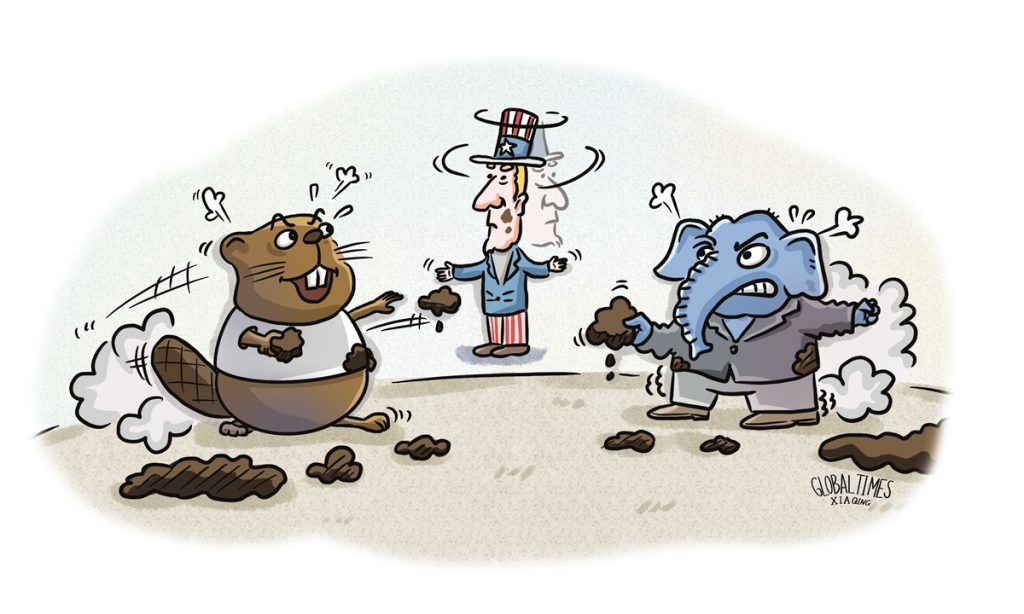
Recently, India and Canada have been caught in a fierce diplomatic row regarding the alleged assassination of Hardeep Singh Nijjar, a Canadian Sikh leader and activist of the Khalistan movement. Canada's accusation that India may have been involved in the alleged assassination has led to tit-for-tat diplomatic expulsions between the two countries and sent relations between them plunging.
As the diplomatic dispute between India and Canada continues to escalate, the US has adopted a very "low-key" and subtle attitude and position, reflecting its lack of control and mediation over ally and partner issues. The US only expressed "deep concern" through a spokesperson from the White House National Security Council.
The wording was relatively vague and restrained, supporting Canada's thorough investigation and calling for India's cooperation in the relevant investigation.
For a long time, American scholars have repeatedly criticized the US government for turning a blind eye to the "human rights violations" committed by the Indian military and police in the Indian-controlled Kashmir region, the expansion of Hindu nationalism within India, and the suppression of minority sects - all due to geopolitical considerations to win over India and contain China.
Other members of the "Anglo-Saxon family," such as the UK and Australia, followed US suit to convey concerns at senior levels to India. The US, through its public statements, aims to both alleviate the discontent within the "Anglo-Saxon clique" and prevent Canada, a staunch ally, from turning its anger toward the US.
With the unfolding diplomatic turmoil, the Biden administration will be increasingly compelled to publicly support Canada, a member of the "Anglo-Saxon clique" and a traditionally obedient ally to the US. However, considering the realpolitik perspective, the US views India as a high-value partner in forming an anti-China coalition and is unwilling to openly criticize India. The core of current US foreign policy is focused on containing China and preserving US global hegemony, necessitating a conciliatory approach toward India.
From the perspective of US strategic behavior, the US generally prefers its allies and partners to maintain "tension" to a certain extent to underscore the US' "indispensable" value and its role as an "offshore balancer" and "behind-the-scenes arbitrator." It is unlikely that the US will allow the India-Canada conflict to continue escalating or spiral out of control without seeking the opportune moment for intervention.
The US may use both public displays of support and behind-the-scene mediation to promote a "soft landing" for the India-Canada dispute in a discreet manner, reassuring old "Anglo-Saxon friends" while signaling to India that they have the means to influence Indian actions.
The India-Canada diplomatic crisis undoubtedly highlights the fact that the US alliance system is far from being monolithic. Members' positions are unequal, and rights and obligations are unbalanced, leading to hidden agendas and making it challenging for the US to "manage its little brothers."
With the decline of US comprehensive national power and limited diplomatic resources, the US no longer has the ability to dictate terms to its allies, let alone to a traditionally non-compliant India, which has historically emphasized "strategic autonomy."
The issue has become more complicated as the US ambassador to Canada revealed that information shared by members of an intelligence-sharing alliance was part of what Canadian Prime Minister Justin Trudeau used to make public allegations of the Indian government's possible involvement in the assassination of a Sikh Canadian, according to CTV on Saturday.
How it will influence the Canada-India spat remains to be seen. However, regardless of how the India-Canada diplomatic dispute is resolved, the aftermath is likely to linger for some time, potentially casting a shadow over mutual trust and warmth between the US and India.
Array